The ambition of Superpower
See Solution

Role
Product Designer
Timeline
January 2026
Skills
Product Design
Prototyping
UX
Overview
Exploring how Superpower might transform static medical records into a dynamic daily guide
Personalized - Nutrition - Intelligence
Problem
Superpower provides excellent annual medical tests plus ongoing concierge and clinician support throughout your health journey.
However, it currently lacks integration with food and habit tracking tools, forcing you to manually track meals in external apps that can't access your medical data or validate choices against your health profile. This also prevents your clinical team from seeing your daily adherence patterns and adjusting recommendations accordingly.
Building an AI-powered dietary tracker allows Superpower to bridge the gap between medical insights and daily habits.
Opportunity
Fitness and calorie-tracking tools are everywhere, but AI-powered dietary recommendations grounded in real medical diagnostics create genuine competitive separation. With a food analyzer, Superpower will define its advantage in the market:
Independence
No longer need to connect with other apps for lifestyle
Continuous monitoring
More data to infer current progress
Active collaboration
More visibility to clinician and concierge teams
Why Now?
AI-powered food recognition has already entered the public consciousness, and has proven product-market fit across multiple apps. The demand is clearly there, but these apps only track macros and calories in isolation.
Superpower's medical insights give it unique leverage to create an entirely new product category on top of an already proven market: connecting what you eat to your actual bloodwork, flagging foods that conflict with your conditions, and giving your clinical team real visibility into daily habits. Integration of this kind has no real competition, and would further set Superpower apart.
Solution & Visuals
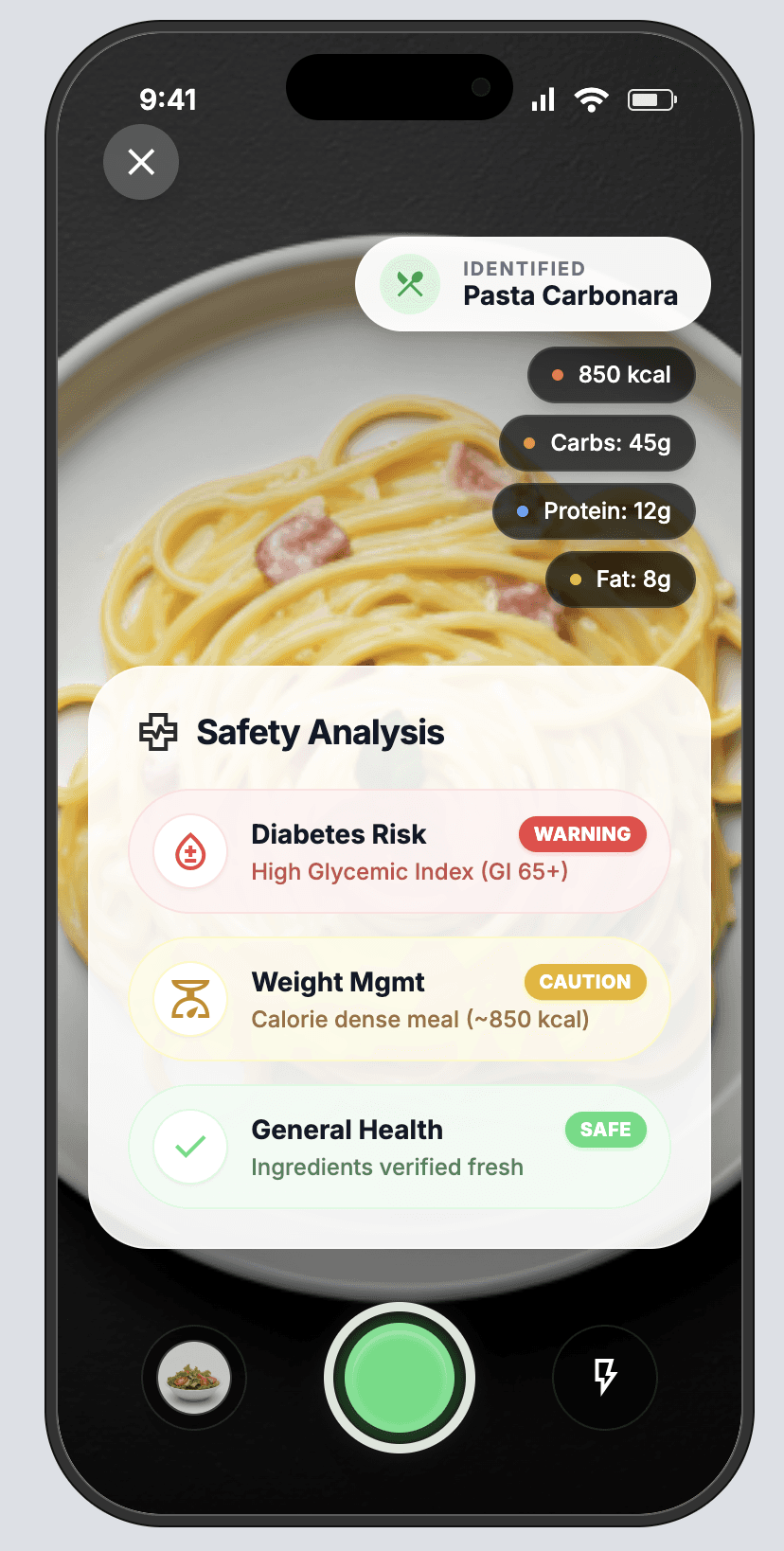
AI-powered dietary assessment tool
A scanner that tracks your daily nutrition, and gives personalized feedback based on your health profile
Research
I studied Superpower's mission of centralizing health data with personalized medical teams to enable proactive rather than reactive care.
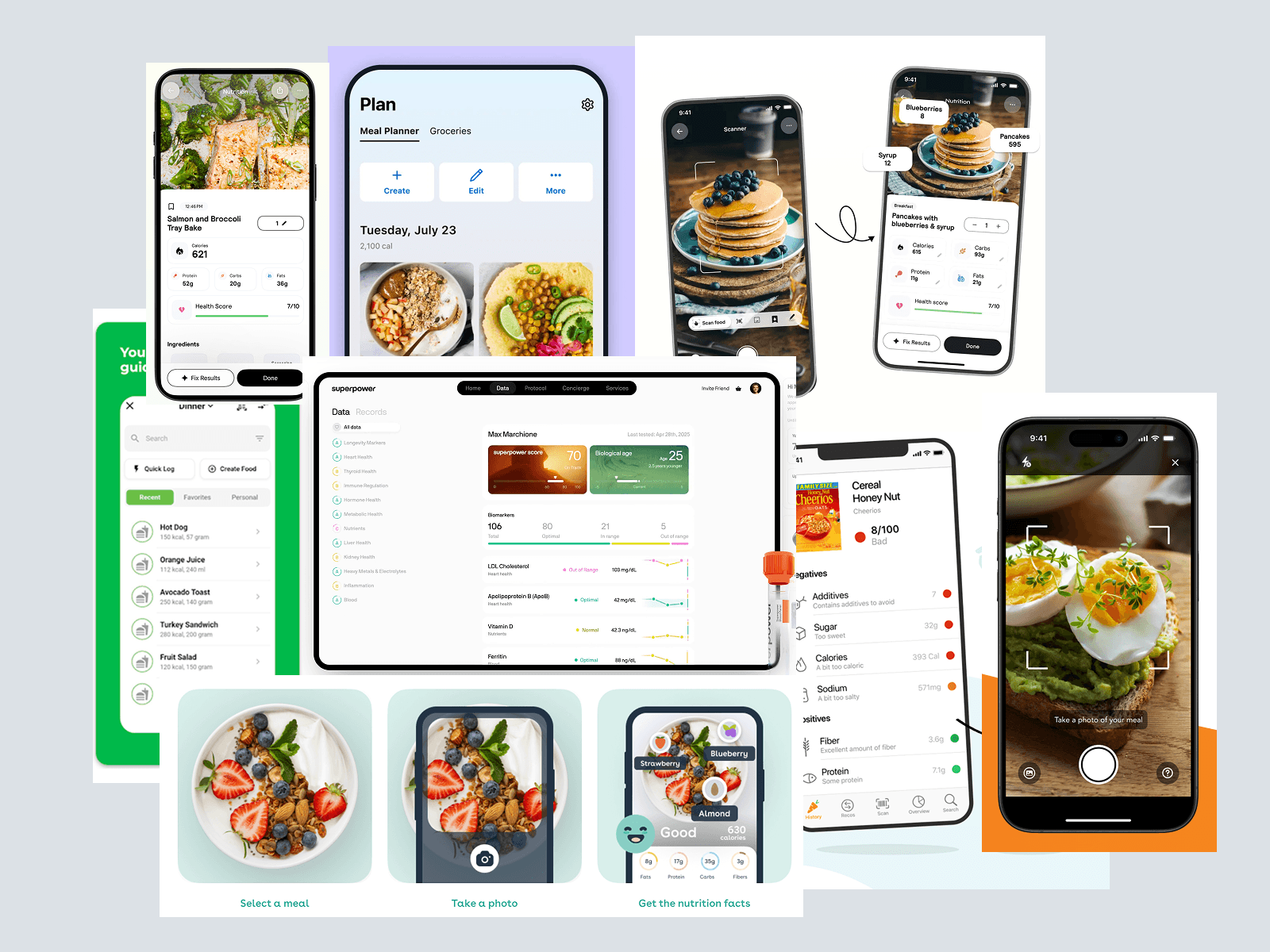
I also analyzed the food-scanning app market, including CalAI, MyFitnessPal, Lose It!, Foodvisor, Yuka, and Bitesnap — all of which use AI to identify meals and track nutrition from photos.
Considerations
How do we handle uncertainty when the camera can't see all the ingredients?
Show users a confidence score and let them verify or correct uncertain results
How do we stop users from abandoning the food diary?
Even the fastest app is trapped behind a lock screen. To reduce friction, I explored ways to integrate with existing device features like iOS Shortcuts or the iPhone's Action Button. That way users can log meals without having to open the app.
How do we address privacy concerns?
Some users won't want detailed dietary data shared with the medical team, so making privacy controls an intuitive and highly visible feature is paramount. Using Superpower should make the user feel empowered, not obligated, and this goes a long way in making that happen.
Reflection
Systems Thinking
This tool doesn't exist in isolation. It's designed to integrate with Superpower's existing ecosystem, feeding insights back to the clinical team and informing future recommendations.
Intention
As I grow as a product designer, bringing intention into every choice I make becomes more and more important to me. While small, the goal with this feature was to bridge the gap between medical data and daily habits — creating a more human picture for the care team beyond raw numbers alone, and grounding daily habits in real medical guidance for the user. If this helps lead to that outcome, then I have succeeded in some part.
Interested?
Check out my other work